Skip to content

Your cart is empty

Continue shopping

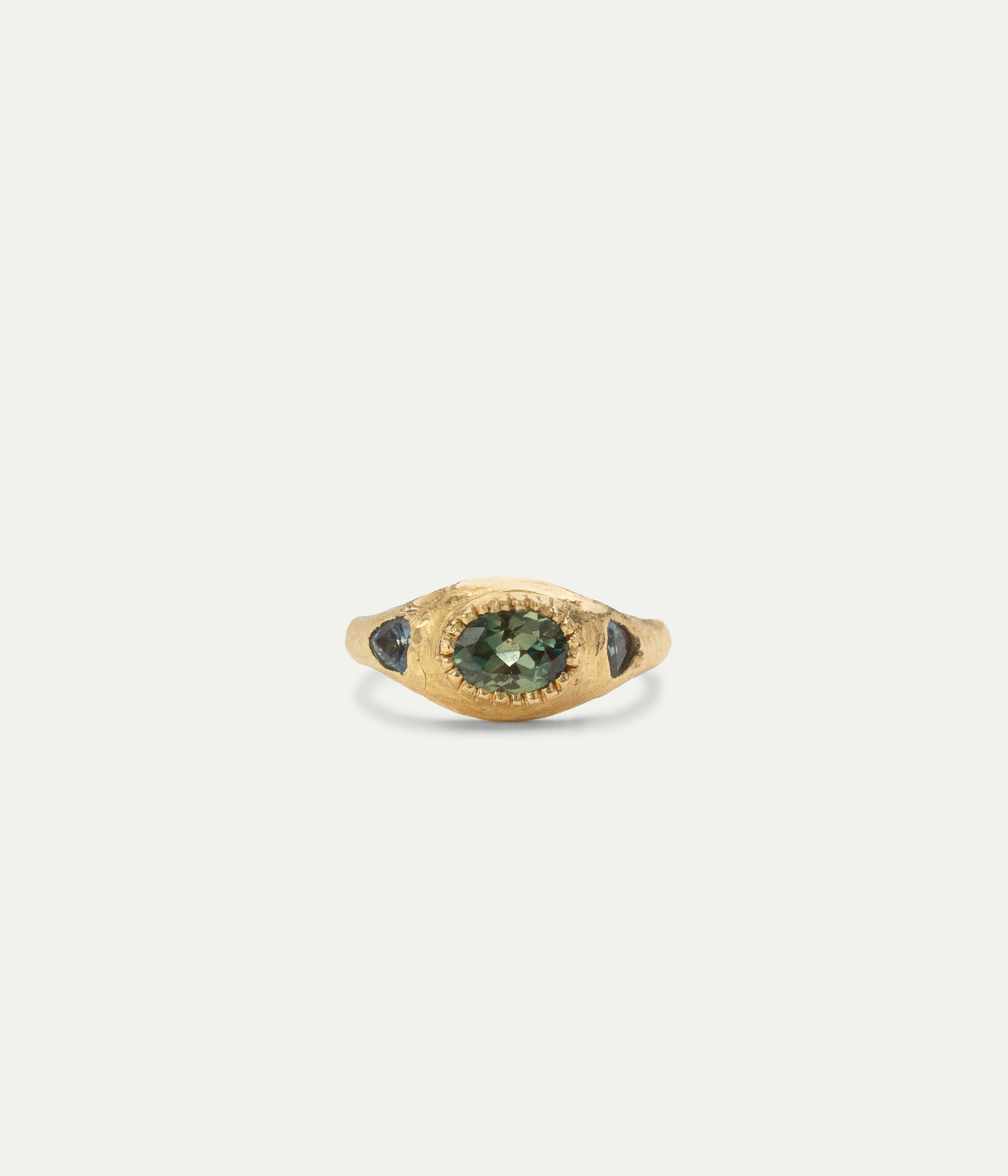
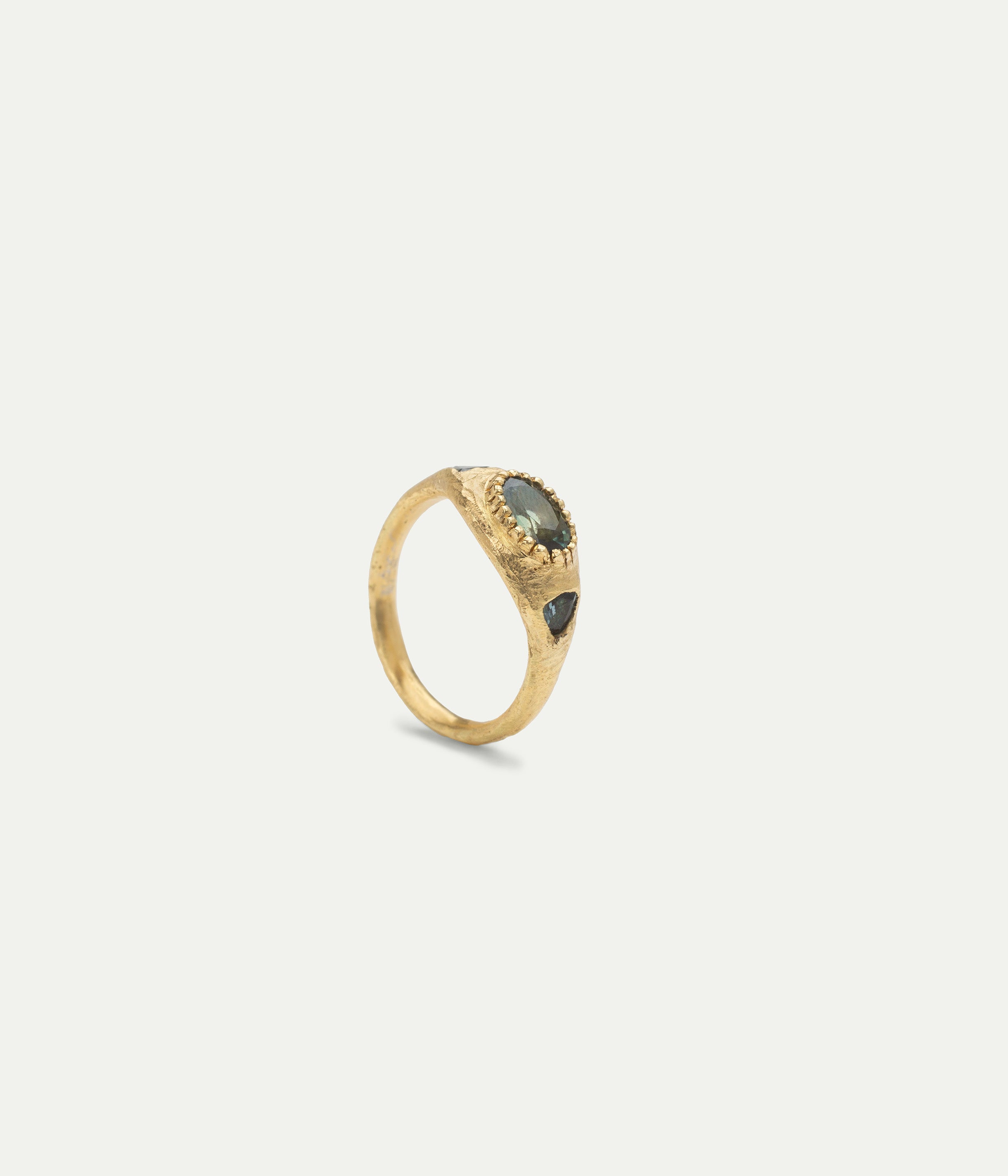
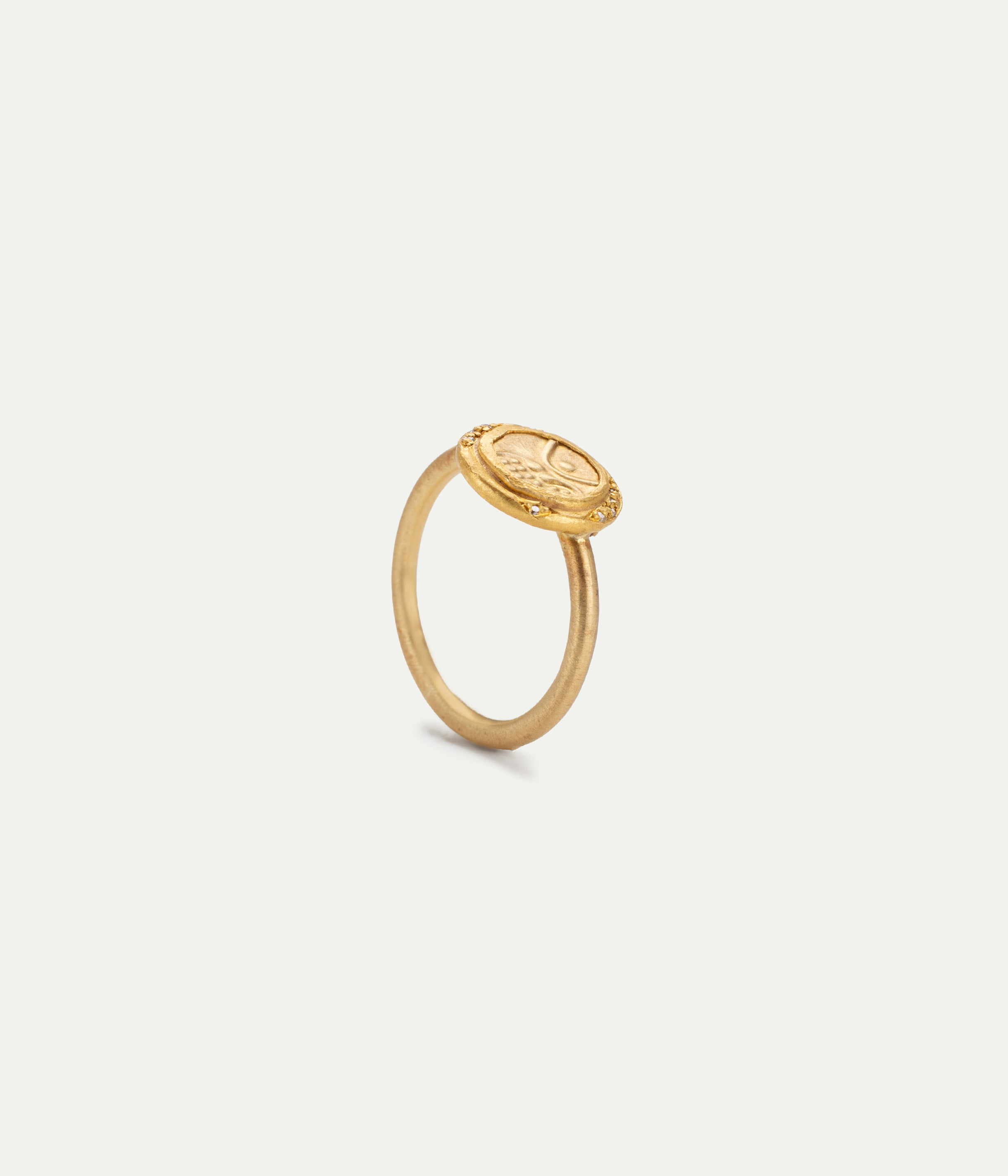
Green Leaf Peridot ring

Tax included.

Sale price€1.350

Green Leaf Ring. Inspired by the shape of a leaf or a protective eye, this ring showcases the bright green glow of a marquise-cut peridot. Set in yellow gold on a silver band, it combines mineral strength with refined design. A precious and organic piece—for those who cherish jewellery infused with symbolism.

Details
Yellow gold Silver Péridot

Or jaune 999/1000
Argent 925/1000
Péridot vert taille marquise 1.20 cts

SKU: KL-WB335_49.5
Where to buy this jewel?
Karen Liberman
Green Leaf Peridot ring
€1.350,00
Green Leaf Peridot ring
Green Leaf Peridot ring49.5 Sale price€1.350
Karen Liberman
Inspirée par le voyage et ses racines marocaines et israéliennes, Karen Liberman crée des bijoux rares, souvent uniques, mêlant pierres singulières et fragments antiques. Entre Australie, Inde et Turquie, son univers convoque la mémoire, l’artisanat et une joaillerie de caractère.
Karen Liberman
Karen Liberman

What is this piece made of?

This piece contains: Yellow gold Silver Péridot

Yellow gold

L’or jaune est la forme la plus emblématique de ce métal précieux : chaleureux, lumineux et étonnamment versatile. C’est l’or dans son expression la plus traditionnelle, celui que les créateurs sculptent, martèlent, texturent ou associent à des diamants et des pierres de couleur pour révéler toute sa richesse. Aujourd’hui encore, la Chine, l’Australie et la Russie comptent parmi les principaux pays producteurs. Mais l’absence de critères éthiques stricts dans l’extraction de l’or a longtemps obscurci son utilisation en joaillerie. La certification Fairmined, créée en 2004, répond à cet enjeu : elle garantit la traçabilité du métal et soutient des pratiques responsables, tant sur le plan social qu’environnemental. Elle permet ainsi de distinguer un or « propre » de l’or de conflit ou extrait via des procédés toxiques. Présent depuis la préhistoire, l’or a été l’un des premiers métaux colorés maîtrisés par les civilisations anciennes. Les Égyptiens en recueillaient de petites quantités le long du Nil et l’élevaient au rang d’ornement sacré. Plus tard, sa valeur attira les conquistadors européens, puis déclencha les ruées vers l’or qui ont marqué l’histoire de l’Ouest américain. En joaillerie, l’or pur reste trop tendre pour être travaillé seul : il doit être allié à d’autres métaux, un pourcentage mesuré en carats. En France, on utilise principalement l’or 9k, 14k et surtout 18k, composé de 75 % d’or pur — un équilibre idéal pour sa solidité, sa stabilité et ses propriétés hypoallergéniques. Certaines créations utilisent également de l’or 22k, reconnaissable à sa teinte intensément jaune.
Yellow gold

Silver

Silver is a precious metal that takes its name from the Latin word for shiny, argentum. After having been a resource of great value in Greece and Crete during Antiquity, silver was subsequently extracted largely in Spain, and later in central Europe. In the 19th century, thanks to numerous advances in production (including the technique of drilling by steam engines and the improvement of transport), many silver mines were discovered and exploited throughout the world. Today, silver is found in the form of veins and nuggets mainly in Mexico, Peru, Australia and China. In traditional jewellery-making, silver is often covered with a thin layer of rhodium which gives it a more homogeneous and stable colour over time. But today designers favour its natural colour and rarely "rhodium" their silver pieces. Instead, they set it with stones and allow it to oxidise for a modern and elegant look. Like gold, silver is malleable. It is therefore impossible to use it at 100% purity for the creation of jewellery. In France, silver is recognised as a precious metal from 800 thousandths of pure silver in the alloy. However, the silver most commonly used in jewellery is 925 thousandths, that is to say an alloy composed of 92.5% pure silver. Different hallmarks are used to classify silver according to its purity. The 925 thousandths silver is marked by a Minerva head. Alloys made up of 80% pure silver are represented by a head of Minerva followed by the number 2. Silver jewellery tends to oxidise on contact with oxygen in the air. This natural oxidation disappears quite easily with specific products for silverware. These must be applied with a soft cloth, then rinsed and dried. At WHITEbIRD, designer Sophie Buhai’s sculptural and often voluminous pieces inspired by the modernist tradition put silver in the spotlight. De Jaegher also use silver in their precious jewellery.
Silver

Péridot

Deux théories s’opposent quant à l’étymologie du mot péridot : certains y voient une origine arabe, faridat (“pierre précieuse”), tandis que d’autres le rattachent au grec chrysos lithos, “pierre dorée”. Sa couleur — un vert lumineux tirant tantôt vers le jaune, tantôt vers des tonalités plus brunes — lui a souvent valu d’être confondu avec l’émeraude dans les trésors royaux. Comme le diamant, le péridot naît dans les profondeurs du manteau terrestre. Ce n’est qu’au gré des mouvements tectoniques et de l’activité volcanique que cette pierre, formée à plusieurs kilomètres sous la surface, remonte jusqu’à nous. Découvert pour la première fois sur une île de la mer Rouge, le péridot est aujourd’hui extrait en Birmanie, au Pakistan, aux États-Unis, en Chine et au Vietnam. L’un des plus grands spécimens connus — un cristal de 310 carats — est conservé au Smithsonian Institute de Chicago. Sa teinte fraîche et transparente séduit par sa clarté immédiate. Dans certaines traditions, on prête au péridot des propriétés liées à la confiance en soi et à l’équilibre émotionnel. Sa lumière douce serait capable d’apaiser la nervosité, la jalousie ou les tensions intérieures. En joaillerie contemporaine, Christina Magdolna ou Grainne Morton l’utilisent en touches délicates, révélant un vert pur et franc, à la fois solaire et raffiné.
Péridot

Taking care of your jewels

Pieces of jewelry are delicate little objects. Even if they are made of resistant materials in order to be worn every day, it is still important to follow some general advice for them to keep their original beauty.

Read Guide

Frequently asked questions

Looking for a quick answer? You’ll find detailed information on our Payment, Delivery and Returns & Exchanges pages. If you need any further assistance, our team will be happy to help — feel free to contact us using the form below.

CONTACT US
Do you ship internationally?

Yes. We ship worldwide from Paris with trusted carriers such as DHL Express or Colissimo. Delivery options and fees are calculated at checkout according to your destination and the value of your order.

  • France: Colissimo for orders up to €1,000, DHL Express above.
  • European Union: Prices are calculated with local VAT applied at checkout, based on the delivery address.
  • United Kingdom & United States: Import duties and VAT are included. No additional charges upon delivery.
  • For deliveries outside the European Union, customs procedures may apply depending on the destination.
When will my order be delivered?

Orders can be collected in one of our Paris boutiques, or shipped to your address.

  • In-stock pieces are usually dispatched within 2 to 5 business days.
  • Delivery times vary depending on destination and carrier.
  • For made-to-order or special pieces, production delays are indicated on the product page.

You will receive a confirmation email with tracking details as soon as your order is shipped.

Are returns or exchanges possible?

Yes. If your piece does not fully suit you, you may request a return or exchange:

  • Within 14 days of receipt (28 days for deliveries to the USA)
  • The piece must be unworn, unaltered, and returned in its original condition.

Please note that engraved, resized or custom-made pieces cannot be returned or refunded. Return shipping costs are at the customer’s expense; however, exchanged items are shipped free of charge within the European Union.

Need advice before choosing?

Our team is here to guide you. For questions about sizing, availability, gemstones or gifting, we offer personalised support by phone or email. You may also book a private video consultation (WhatsApp or FaceTime) to view pieces live, receive styling advice or explore a curated selection — just as you would in our boutiques.

  • Tel : +33 (0)1 42 60 52 39
  • Email : contact@whitebirdjewellery.com