Skip to content

Your cart is empty

Continue shopping

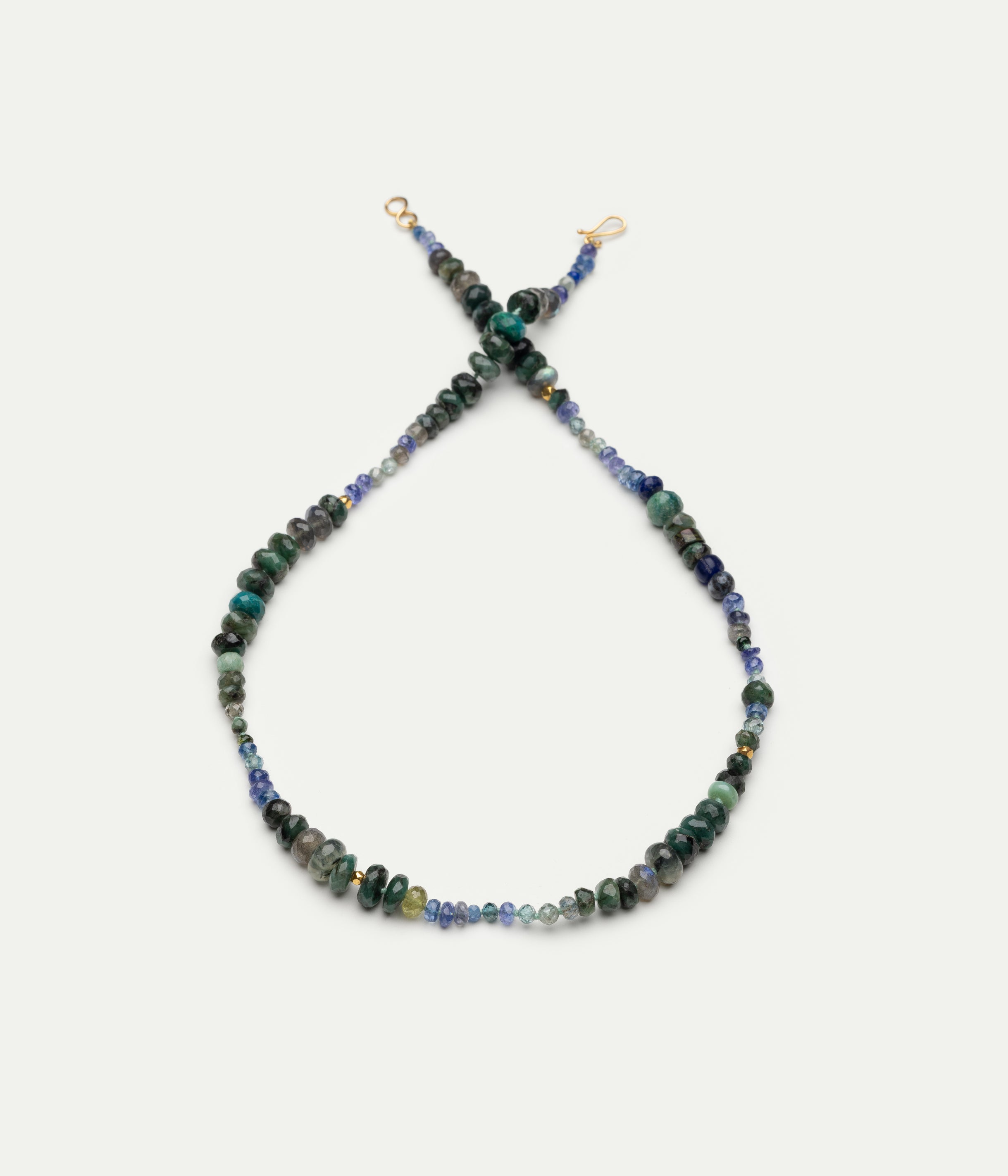
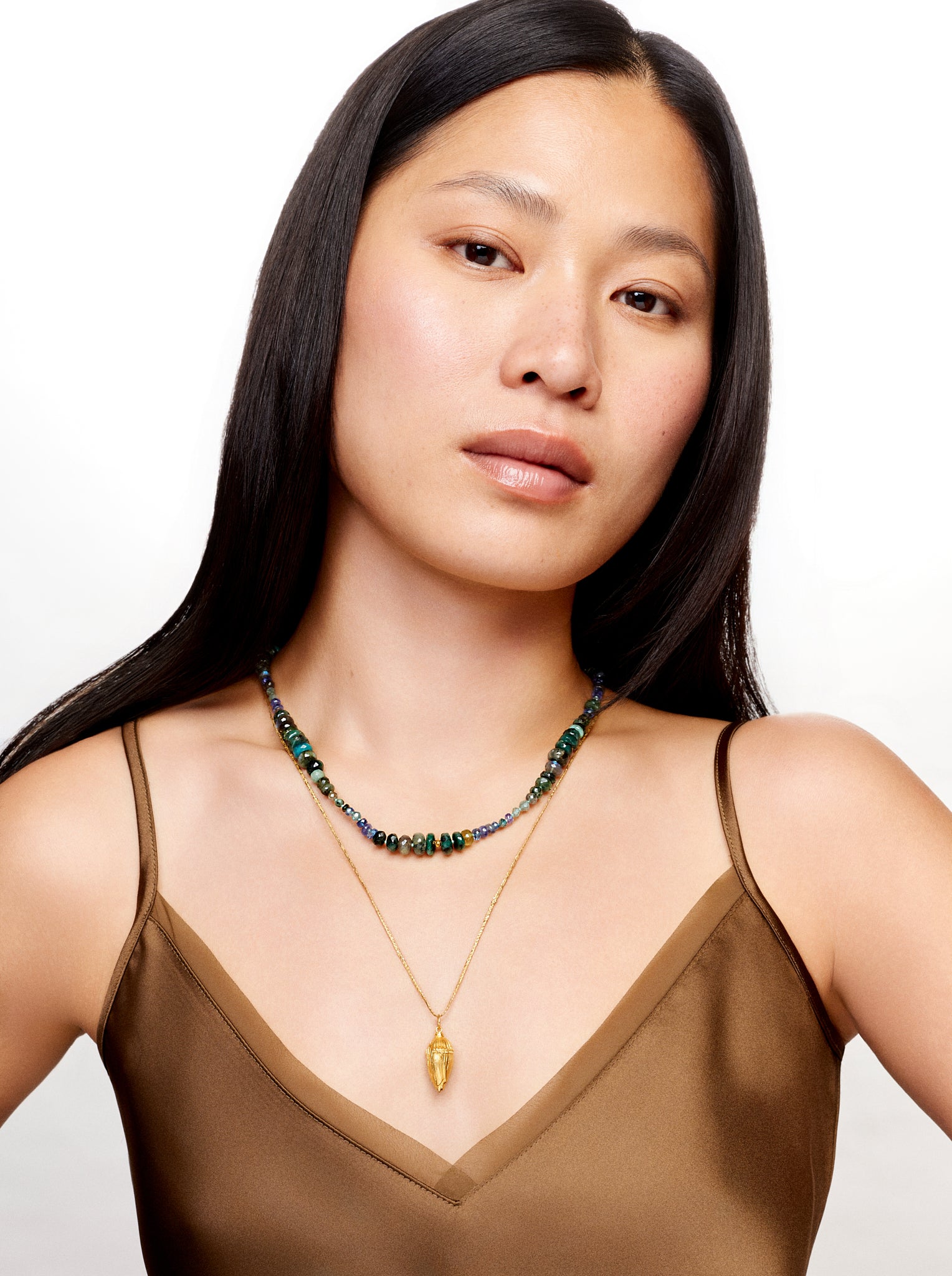
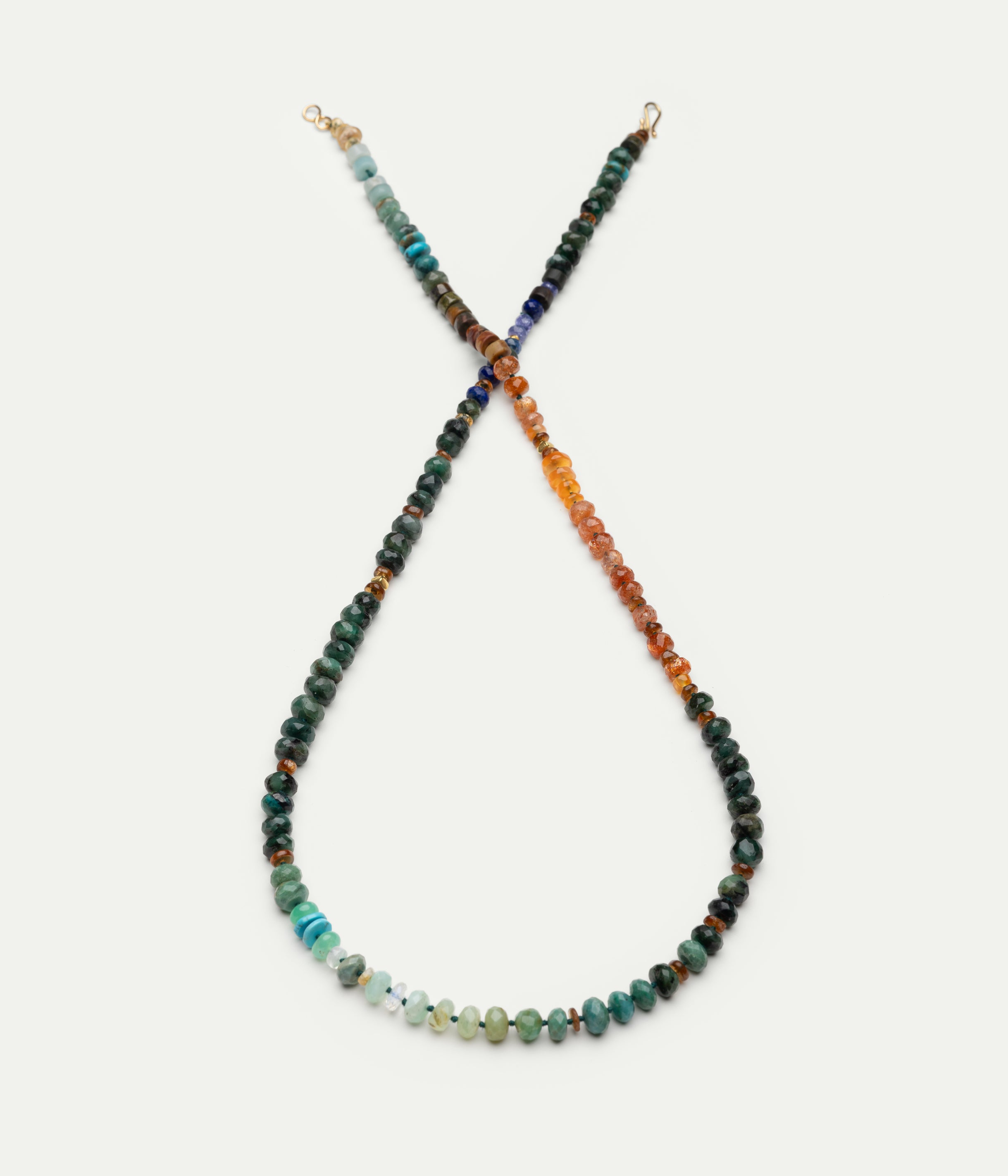
Collier Midnight Silk kyanite

Tax excluded.

Sale price€550
Details
Yellow gold Kyanite Opal Aquamarine Turquoise Sapphire Tourmaline Tanzanite

Fermoir or jaune 375/1000
Kyanite, opale, aigue marine, turquoise, saphir, tourmaline, émeraude, tanzanite
Longueur: 37cm

SKU: LS-SIFN_U
Where to buy this jewel?
Lena Skadegard
Collier Midnight Silk kyanite
€550,00
Collier Midnight Silk kyanite
Collier Midnight Silk kyaniteU Sale price€550

Lena Skadegard

Lena Skadegard
Blending 3D design, philosophy and travel, Lena Skadegard creates one-of-a-kind jewellery from organic, raw materials. Each piece follows the natural character of stones and fossils, celebrating unexpected pairings and a spiritual approach to adornment.
Lena Skadegard
Lena Skadegard

What is this piece made of?

This piece contains: Yellow gold Kyanite Opal Aquamarine Turquoise Sapphire Tourmaline Tanzanite

Yellow gold

Gold has long been celebrated for its warmth, its glow and its remarkable versatility. Yellow gold, in particular, is the metal in its most traditional expression — the colour that traverses centuries and civilisations. Designers sculpt it, texture it, hammer it or set it with diamonds and coloured stones, revealing a material that is both noble and endlessly adaptable. China, Australia and Russia remain today the world’s leading gold producers. Yet the limited ethical regulations governing extraction have long cast a shadow over its use in jewellery. This is why the Fairmined label was created in 2004: to guarantee the traceability of gold and ensure its positive impact on social development and environmental protection. Thanks to this certification, gold can now be considered “clean”, as opposed to conflict gold or gold extracted using harmful processes. Used since prehistory, gold was one of the first coloured metals mastered by ancient metallurgists. In Egypt, it was collected in small quantities along the Nile and elevated through religious ornamentation. Later, European conquistadors seized its value, while the American Gold Rush shaped an entire region of the West. Today, gold still plays a central economic role and is traded on major international exchanges. In its pure form, however, it remains too soft to be used alone in jewellery. It must be alloyed with other metals, measured in karats. The French market recognises 9k, 14k and especially 18k gold — the latter composed of 75% pure gold, ideal for its durability, stability and non-allergenic properties. 22k gold, intensely yellow and emblematic in India, is also used by certain designers.
Yellow gold

Kyanite

Kyanite — also known as disthene — is easily recognised by its internal striations and deep blue tones softened by lighter highlights. Its colour ranges from vivid blue to soft blue-grey depending on the crystal’s orientation and the light passing through it. This visual signature stems from its fibrous structure, which also results in a notable variation in hardness depending on the axis — a rare characteristic among minerals. Found in deposits in Nepal, Brazil, India and Kenya, kyanite forms within metamorphic rocks exposed to high pressure. Each origin reveals slightly different nuances, giving the stone a subtle and shifting palette. Across various traditions, kyanite has been associated with clarity and inner calm. Its cool tones and gently translucent appearance contribute to this sense of quiet composure. With its distinctive character and almost liquid glow, kyanite appeals to designers seeking a gemstone with a deep, expressive blue and a refined, contemporary presence.
Kyanite

Opal

The word opal originates from the Sanskrit upala, meaning “precious stone,” later adapted into Greek (opallion) and Latin (opalus), both evoking the idea of shifting colour. This notion lies at the heart of opal’s identity: a mineral defined by its remarkable play of colour, varying from subtle iridescence to vivid, electric flashes. A distinction is commonly made between noble opals, prized in jewellery for their multicoloured brilliance, and common opals, which are often more uniform or translucent. Among the many varieties are black opal, known for its dramatic contrasts, and Mexican fire opal, admired for its vibrant orange hue. Major deposits are found in Australia, Brazil, Guatemala, Honduras, Japan, Mexico, Peru and the United States. Milky white opals with colour flashes remain among the most iconic. Opal has inspired countless legends. In India, a rainbow goddess is said to have transformed herself into an opal to escape persistent suitors. In Arabic tradition, opal was believed to be born from lightning, with the captured light trapped inside the stone. With its shifting hues and delicate radiance, opal captivates designers such as Brooke Gregson, Ivarene and WWAKE. It also features in our We by WHITEbIRD collection, where its unique luminosity reveals its full beauty through movement.
Opal

Aquamarine

Ranging from the clear blue of open water to the green-blue of a tropical lagoon, aquamarine takes its name from the Latin aqua marina, meaning “sea water.” Its colour is linked to traces of iron within the mineral, and varies according to its origin. The deeper the blue, the rarer and more coveted the stone becomes. A member of the beryl family — alongside emerald and morganite — aquamarine is primarily sourced from Pakistan and Brazil, where exceptionally large specimens, sometimes exceeding 100 kg, have been discovered. Its clarity, luminosity and subtle variations of tone have long appealed to designers such as Ruth Tomlinson and Pippa Small, and it also features in our in-house collection We by WHITEbIRD. Across different cultures, aquamarine has been associated with symbolic meanings. Some traditions view it as a stone that fosters harmony in relationships or protects travellers, particularly sailors. With its serene palette and natural brilliance, aquamarine continues to be one of the most sought-after gemstones in contemporary jewellery.
Aquamarine

Turquoise

Turquoise takes its name from the Old French turquois, meaning “Turkish,” referring to the trade route through which it reached Europe. Mined in Afghanistan, Australia, China, the United States, Iran, Mexico and Tanzania, it ranges from deep azure to vivid green. Its colour depends on its chemistry: copper creates bluer tones, chromium and vanadium produce greens, and iron introduces a touch of yellow. Containing around 18% water, turquoise can dry out, tarnish or subtly change colour over time. Its matrix patterns — where other minerals weave through the stone — give it a uniquely organic charm. Used for over 6000 years, turquoise was cherished in Ancient Egypt; Queen Zar wore it as a protective amulet. Among Apache communities, it guided hunters and warriors. Today, it remains associated with joy, optimism and emotional stability. In contemporary jewellery, turquoise is appreciated for its vibrant hues and natural texture. Pascale Monvoisin often incorporates it for its raw beauty and distinctive presence.
Turquoise

Sapphire

Sapphire takes its name from the ancient Greek sappheiros, meaning “blue stone,” though some trace it to the Hebrew saphar, “to engrave.” Known for its exceptional resistance to scratching — second only to diamond — sapphire is used not only in fine jewellery but also in watch crystals, camera lenses and certain smartphone components. Found in the United States, Canada and various tropical regions, sapphire belongs to the corundum family. While it is most often associated with blue, its spectrum is remarkably wide: greens, purples, pinks, oranges, yellows, and the celebrated star sapphires, displaying an asterism created by multidirectional light refraction. Across traditions, sapphire symbolises truth, loyalty and strength. Its saturated colour and steady brilliance give it a quiet authority, often linked to clarity and sincerity. In contemporary jewellery, designers such as Polly Wales and Ruth Tomlinson value sapphire for its versatility and expressive palette, using it to create pieces that feel both textured and luminous.
Sapphire

Tourmaline

Tourmaline takes its name from the Sinhalese turmali, meaning “stone of mixed colours,” a fitting tribute to its remarkable diversity — more than thirty varieties ranging from subtle hues to striking colour combinations. Among them are elbaite, which can appear colourless, blue, green or pink, and the sought-after “watermelon” tourmaline with its pink centre and green rim. Found in Afghanistan, Mozambique, Brazil, Madagascar, Russia and the United States, tourmaline is one of the most versatile gemstones in the mineral kingdom. Across cultures, it is associated with protection and balance. In parts of Africa, among Native American communities and within Australian Aboriginal traditions, it is regarded as a talisman capable of absorbing negative energy. In contemporary jewellery, its vibrant palette appeals to every sensibility. Our designers love the way its colours recall a collection of precious confections — a joyful, expressive and endlessly varied stone.
Tourmaline

Tanzanite

Tanzanite takes its name from Tanzania, where it was discovered in the 1960s after storms around Mount Kilimanjaro. Originally brownish, it develops its blue-violet colour when exposed to heat. A trichroic gemstone, it can display blue, violet and bronze tones depending on the crystal’s orientation. Some fancy tanzanites even show striking multicoloured flashes. Found only in a 20 km² area in northern Tanzania, it is one of the rarest gemstones in the world. The Queen of Kilimanjaro, a 242-carat tanzanite set by Tiffany, remains its most famous example. Associated with creativity and self-expression, tanzanite inspires designers such as Brooke Gregson and Pippa Small, who value its balance of depth and softness.
Tanzanite

Taking care of your jewels

Pieces of jewelry are delicate little objects. Even if they are made of resistant materials in order to be worn every day, it is still important to follow some general advice for them to keep their original beauty.

Read Guide

Frequently asked questions

Looking for a quick answer? You’ll find detailed information on our Payment, Delivery and Returns & Exchanges pages. If you need any further assistance, our team will be happy to help — feel free to contact us using the form below.

CONTACT US
Do you ship internationally?

Yes. We ship worldwide from Paris with trusted carriers such as DHL Express or Colissimo. Delivery options and fees are calculated at checkout according to your destination and the value of your order.

  • France: Colissimo for orders up to €1,000, DHL Express above.
  • European Union: Prices are calculated with local VAT applied at checkout, based on the delivery address.
  • United Kingdom & United States: Import duties and VAT are included. No additional charges upon delivery.
  • For deliveries outside the European Union, customs procedures may apply depending on the destination.
When will my order be delivered?

Orders can be collected in one of our Paris boutiques, or shipped to your address.

  • In-stock pieces are usually dispatched within 2 to 5 business days.
  • Delivery times vary depending on destination and carrier.
  • For made-to-order or special pieces, production delays are indicated on the product page.

You will receive a confirmation email with tracking details as soon as your order is shipped.

Are returns or exchanges possible?

Yes. If your piece does not fully suit you, you may request a return or exchange:

  • Within 14 days of receipt (28 days for deliveries to the USA)
  • The piece must be unworn, unaltered, and returned in its original condition.

Please note that engraved, resized or custom-made pieces cannot be returned or refunded. Return shipping costs are at the customer’s expense; however, exchanged items are shipped free of charge within the European Union.

Need advice before choosing?

Our team is here to guide you. For questions about sizing, availability, gemstones or gifting, we offer personalised support by phone or email. You may also book a private video consultation (WhatsApp or FaceTime) to view pieces live, receive styling advice or explore a curated selection — just as you would in our boutiques.

  • Tel : +33 (0)1 42 60 52 39
  • Email : contact@whitebirdjewellery.com