

Apatite
Apatite takes its name from the Greek apatē, meaning “deception,” a reference to the stone’s ability to be mistaken for other minerals such as beryl or tourmaline. Found in a wide range of colours — from soft lagoon blue to deep green, honey yellow or even violet — it is primarily sourced today from Brazil, Madagascar, Mexico and Russia. Its brightness and crystalline clarity make it a striking choice for jewellery, especially when cut into delicate cabochons or faceted stones.
Because it is slightly softer than many gemstones, apatite is often used in pieces designed for occasional wear or set in protective settings. Its vivid hues, however, give it a strong visual impact and make it a favourite of contemporary designers exploring colour in refined, modern ways.
Across various cultures, apatite has been attributed symbolic meanings. Some traditions believe it encourages communication, creativity or personal expression, while others associate it with clarity or emotional release.
With its luminous palette and organic inclusions, apatite brings a fresh, vibrant accent to jewellery, whether used as a centre stone or in subtle tonal compositions.
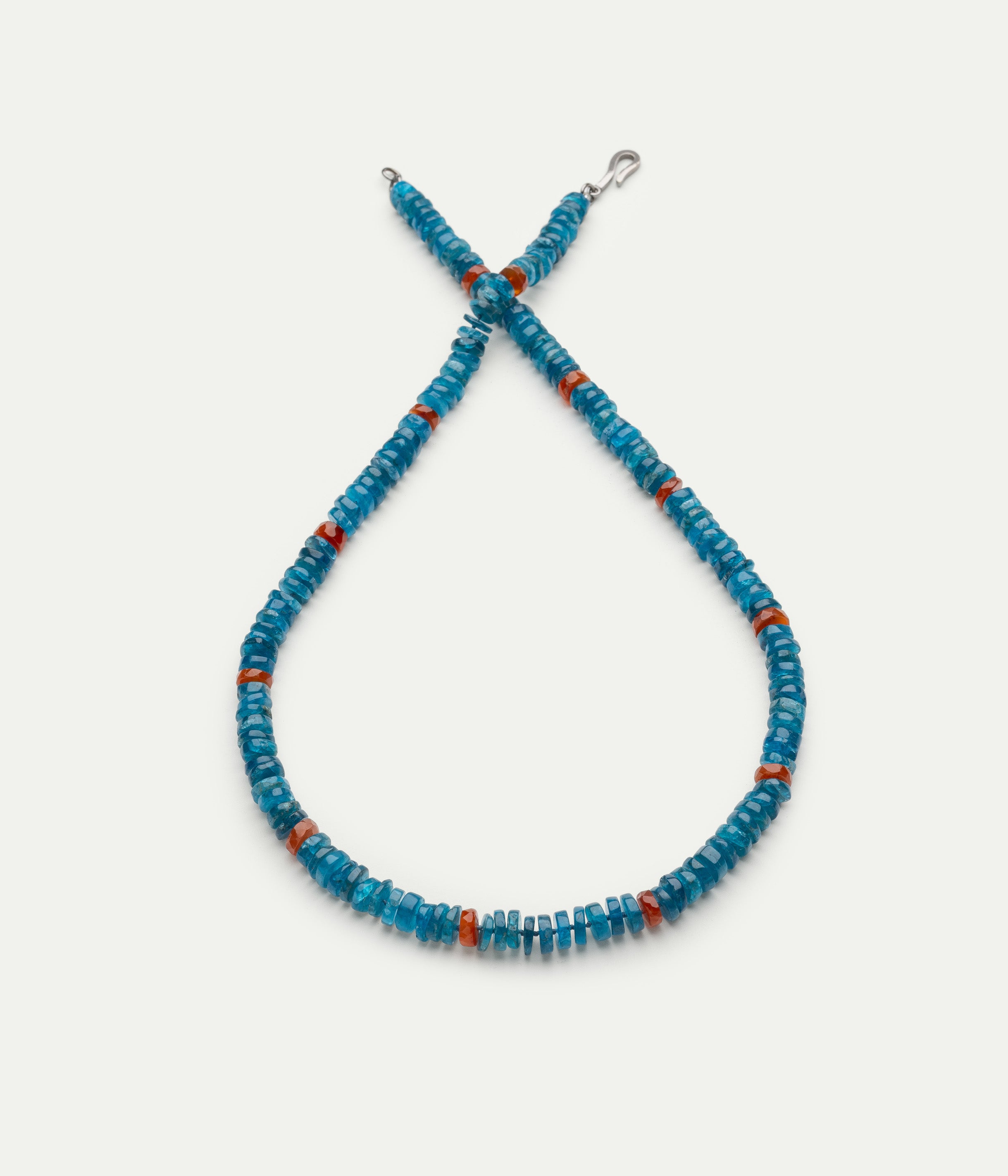
Ileana Makri
Apatite and carnelian necklace
White gold / Apatite / Carnelian
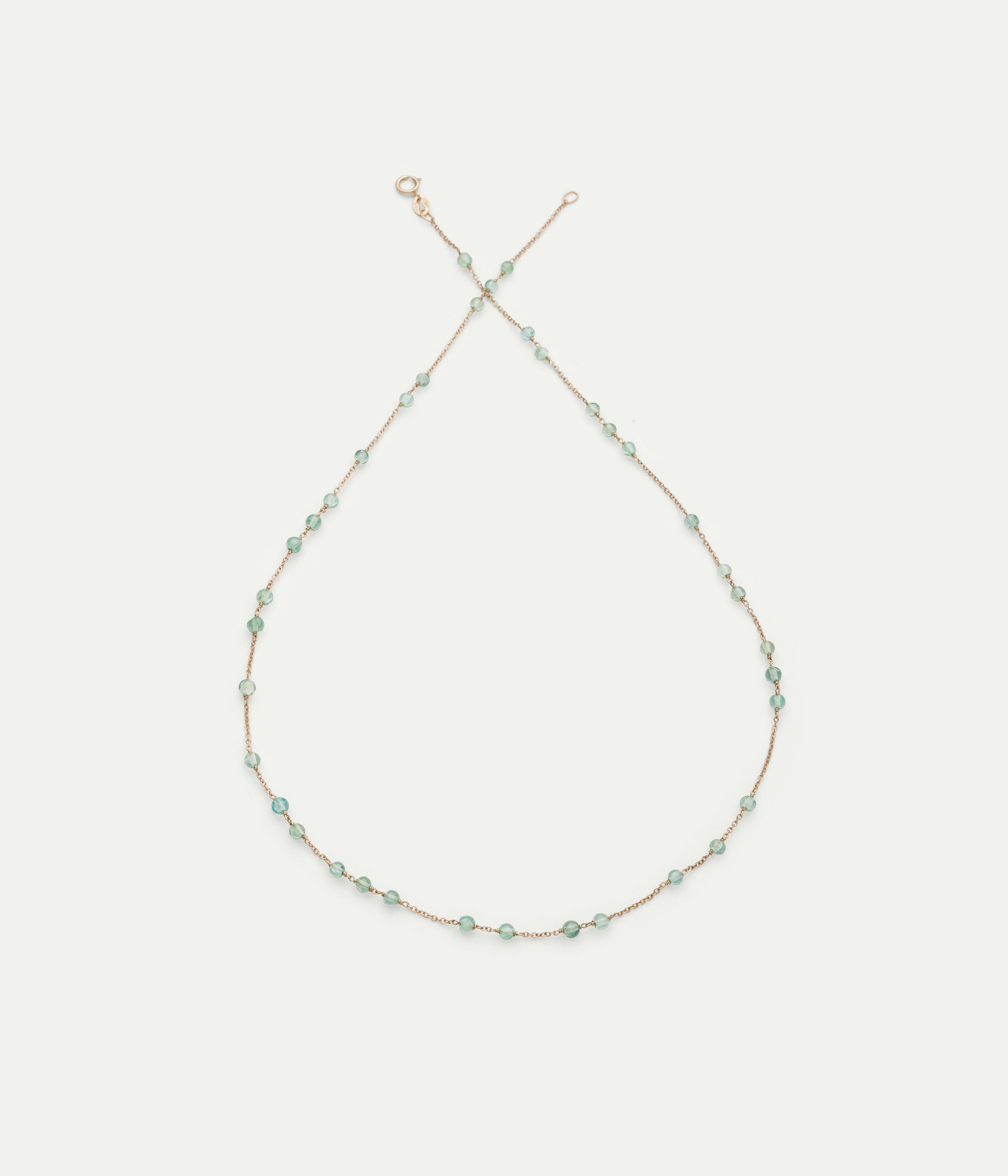

White gold / Apatite
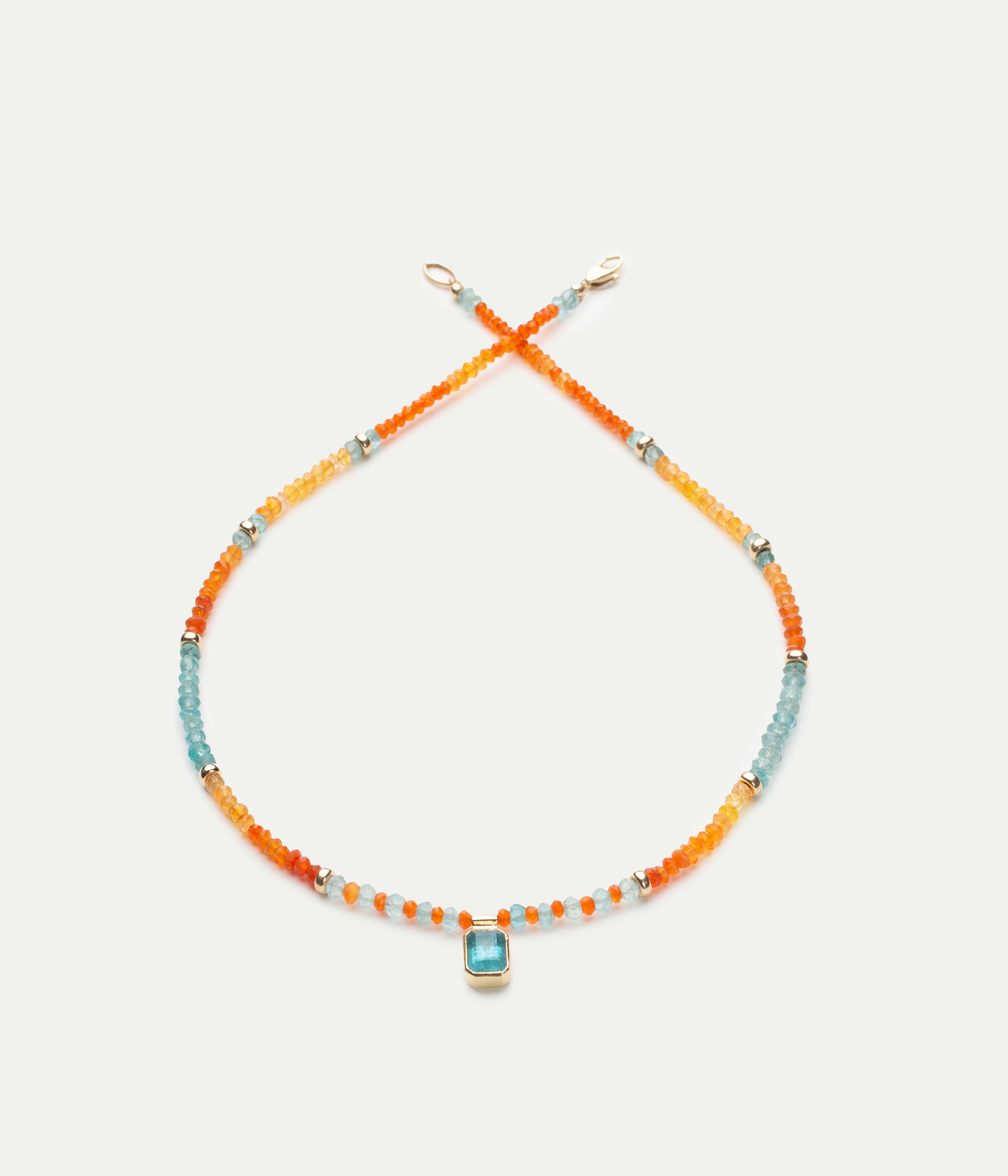
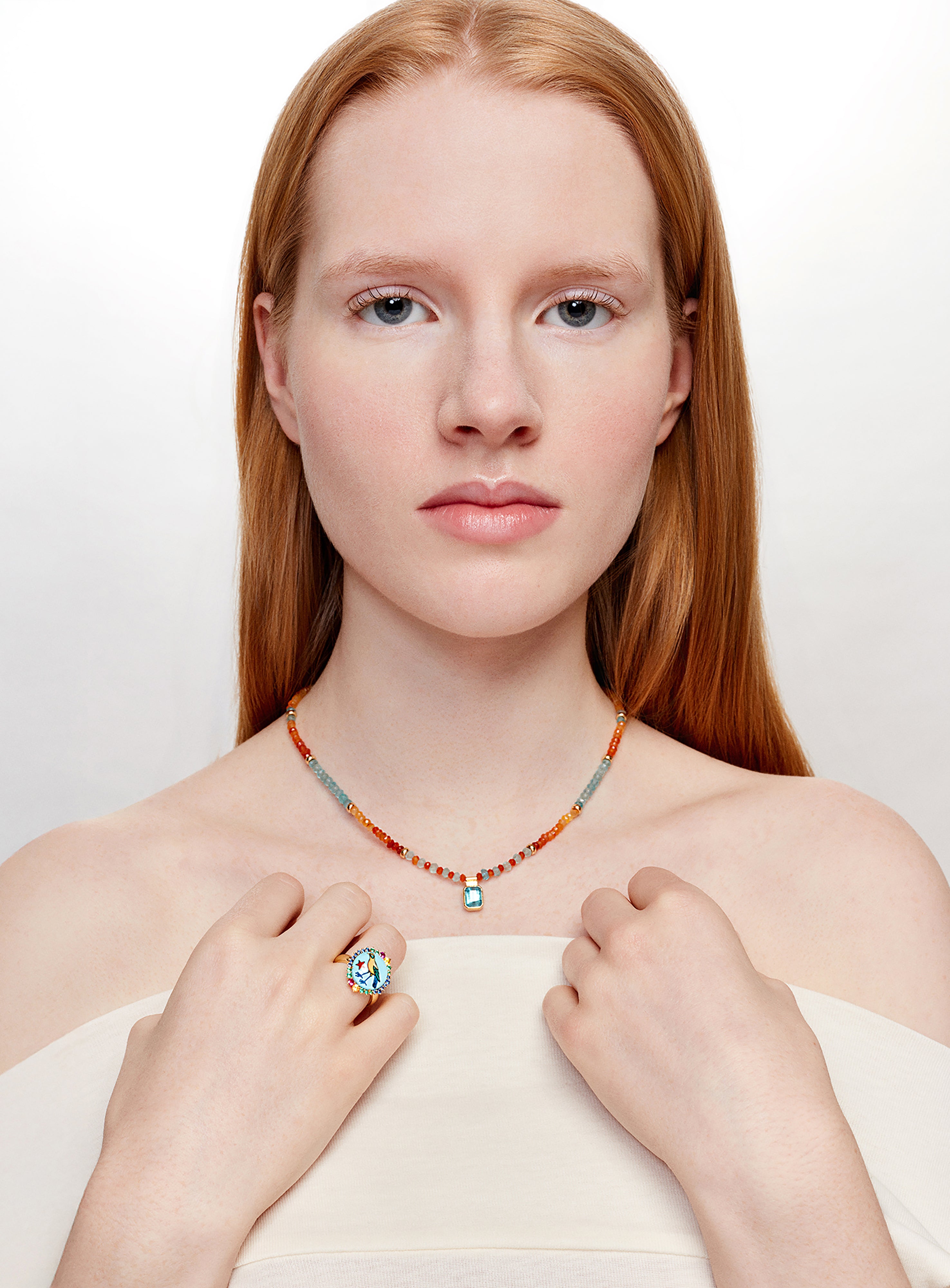
Christina Magdolna
Beaded Tourmaline and diamond necklace
Yellow gold / Tourmaline / Diamond / Carnelian / Apatite